Buttery Cherry Danish Pastries
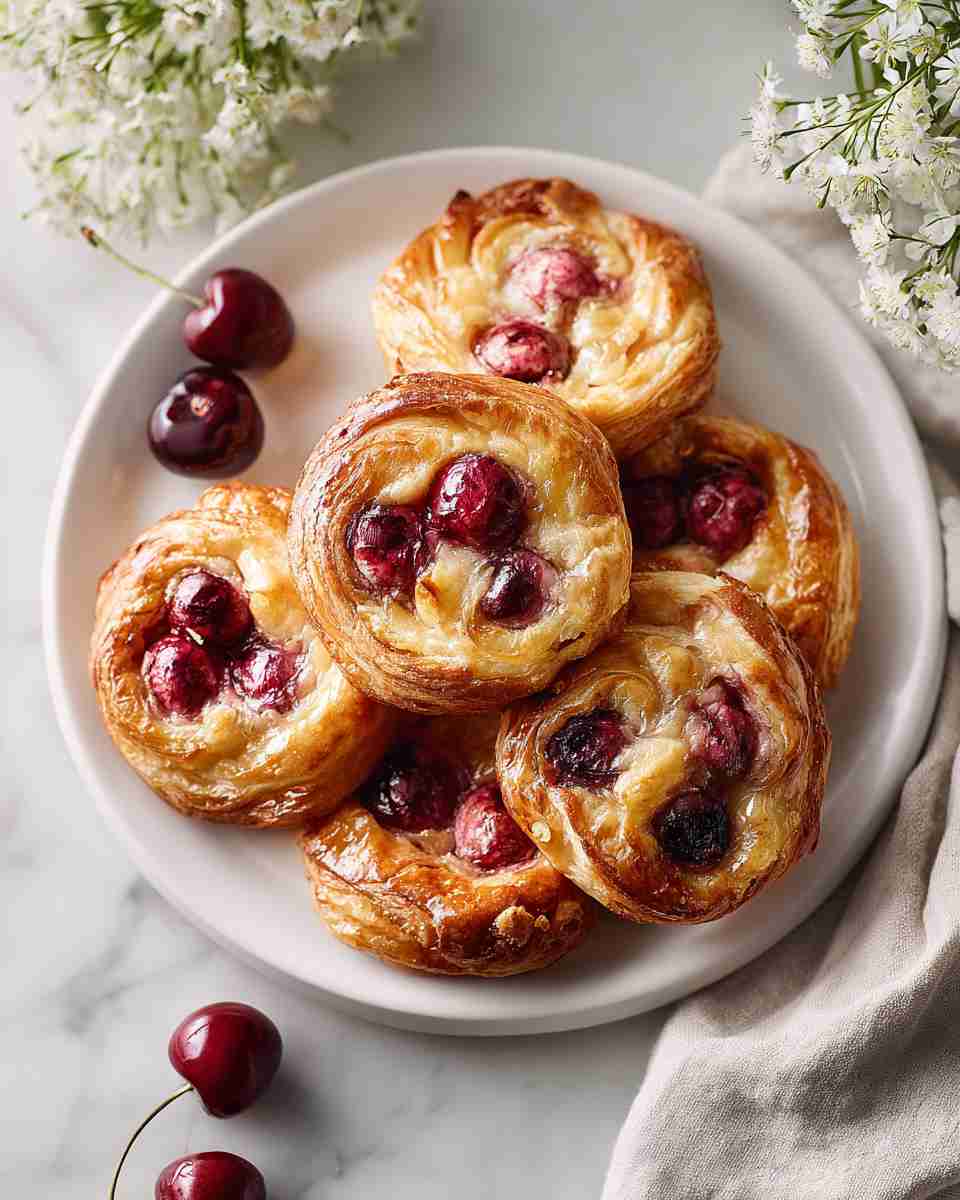
Indulge in these flaky, buttery Danish pastries filled with juicy cherries. The tender, yeast-risen dough is layered with rich shortening, creating a delightful texture and flavor. Perfect for any special occasion or weekend brunch.
Instructions
-
1
In a large bowl, dissolve yeast in warm water. Add the warm milk, 1/4 cup shortening, sugar, 2 eggs, salt, mace, extracts, and 2 cups flour; beat until smooth. Add enough remaining flour to form a soft dough.
-
2
Turn dough onto a floured surface and knead until smooth and elastic, about 6-8 minutes. Place in a greased bowl, turning once to grease the top. Cover and let rise in a warm place until doubled, about 1 hour.
-
3
Punch down the dough. On a large floured surface, roll the dough out to a 24x16-inch rectangle. Dot half the dough with 1/4 cup shortening, then fold the dough lengthwise. Repeat this folding process 3 more times, dotting with the remaining shortening. Place the dough in a greased bowl, cover, and let rise for 20 minutes.
-
4
On a floured surface, roll the dough into a 16x15-inch rectangle. Cut into 8x3/4-inch strips and coil each strip into a spiral shape, tucking the ends underneath. Place the spirals in two greased 15x10x1-inch baking pans. Cover and let rise in a warm place until doubled, about 1 hour.
-
5
Preheat the oven to 375°F. Beat the remaining egg. Make a depression in the center of each roll and brush with the beaten egg. Fill each depression with 1 tablespoon of cherry pie filling. Bake for 15-18 minutes or until golden brown. Cool on a wire rack. Combine the confectioners' sugar, vanilla, and milk; drizzle over the rolls. Sprinkle with chopped almonds.
Nutrition Information
Per serving (based on 12 servings)
Nutrition information is automatically calculated and should be considered an estimate.